
UPPER SANDUSKY, Ohio — Wyandot County Public Health’s mosquito surveillance program identified a West Nile virus (WNV)-positive mosquito sample through routine trapping efforts. While there have been no human cases of WNV reported in Wyandot County in 2026, this positive mosquito sample serves as a reminder of the importance of preventing mosquito bites.
WNV may be transmitted to humans through the bite of infected mosquitoes and can cause potentially serious illness. The virus is present in mosquito populations in many counties in Ohio. The positive sample was collected in Upper Sandusky on Aug. 5, 2026, and confirmed positive on Aug. 14, 2026. Human cases of WNV have occurred in Wyandot County as recently as 2024.
“We generally know that West Nile virus is present in county mosquito populations, and expect positive samples each year,” Wyandot County Director of Environmental Health Molly Carlisle explained. “While this positive sample doesn’t come as a surprise, it’s a good reminder of the importance of using a good repellent and taking steps to remove mosquito breeding sites around your home.”
Wyandot County Public Health is proactive in monitoring mosquito-borne illness by trapping and testing local mosquito populations each summer. Mosquito samples are collected in specialized traps and tested through the Ohio Department of Health for both WNV and La Crosse Virus.
In 2026, Wyandot County Public Health received a Mosquito Control Grant from the Ohio EPA, providing the public free access to mosquito-bite prevention tools, including insect repellent, screen repair tape, and mosquito dunks, which kill mosquito larvae in still water before they can grow into biting adults.
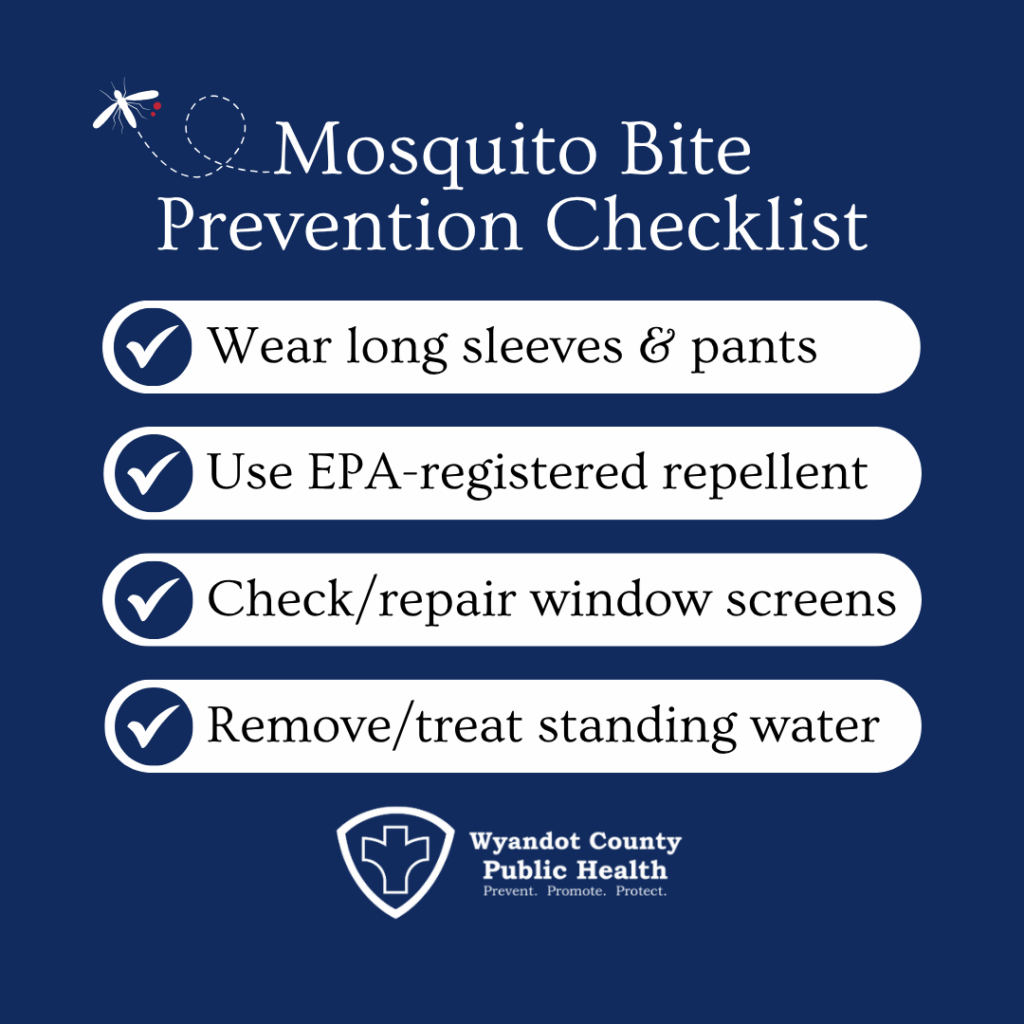
To reduce the risk of mosquito bites, take the following steps:
- When spending time outdoors, wear long sleeves/pants and apply an Environmental Protection Agency–registered mosquito repellent containing DEET at a concentration of at least 30%.
- Check that door and window screens are tight-fitting and free of tears. Repair or replace all torn screens.
- Mosquitoes require small amounts of still water to reproduce. Store or properly dispose of items around the home where water collects, such as plastic wading pools, wheelbarrows, off-rim tires, empty containers, and plant saucers. Change water in bird baths at least once a week.
- Ensure roof gutters drain properly. Clean clogged gutters, especially as autumn leaves fall.
- Check trees for cavities that hold water and fill them with soil, gravel, or sand.
- Remind or help neighbors to eliminate breeding sites on their properties.
Additional Resources
Ohio Department of Health - West Nile Virus
Centers for Disease Control and Prevention - Preventing West Nile