
Thanksgiving is on its way, but before the big meal, Wyandot County Public Health encourages the community to review food safety tips to ensure a memorable holiday meal for the right reasons.
Wyandot County Public Health Registered Environmental Health Specialist Lydia Ingalls reiterated the importance of following the four main food safety tips when preparing food: clean, separate, cook and chill.
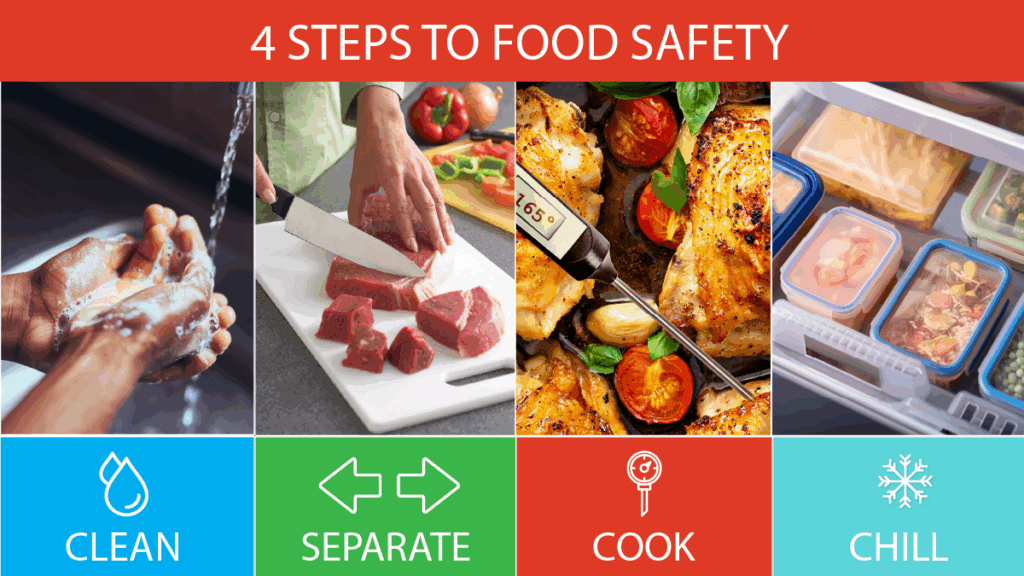
Clean
To start Thanksgiving Day with a clean slate, Ingalls advised starting with the fridge. Thanksgiving meals often require plenty of fridge space. Before thawing the turkey or buying any ingredients for the big meal, remove old and expired items, clean off the bottom shelf for raw meat storage and clean and sanitize fridge surfaces with soap and water and a sanitizing solution of 1 tablespoon of liquid chlorine per 1 gallon of water.
Wash hands with soap and warm water for at least 20 seconds before beginning meal prep and after handling raw food. Clean kitchen surfaces, dishes, and utensils with soap and hot water. Sanitizing adds an extra layer of protection and can be accomplished with a liquid chlorine-and-water solution. After cleaning, let surfaces, dishes, and utensils air-dry, as hand-drying with a towel or cloth introduces new germs.
While it may ruffle a few feathers, Ingalls encourages skipping the turkey rinse before cooking.
“While this used to be common, we now know that rinsing a turkey is not only unnecessary, but also likely to spread germs, like salmonella, into your sink and surrounding kitchen surfaces, increasing the risk for cross-contamination,” Ingalls warned. “Cooking a turkey, juices and all, to the proper temperature is enough to kill the germs we don't want to eat, keeping surfaces clean and ready for the next step in preparing holiday meals.”
Separate
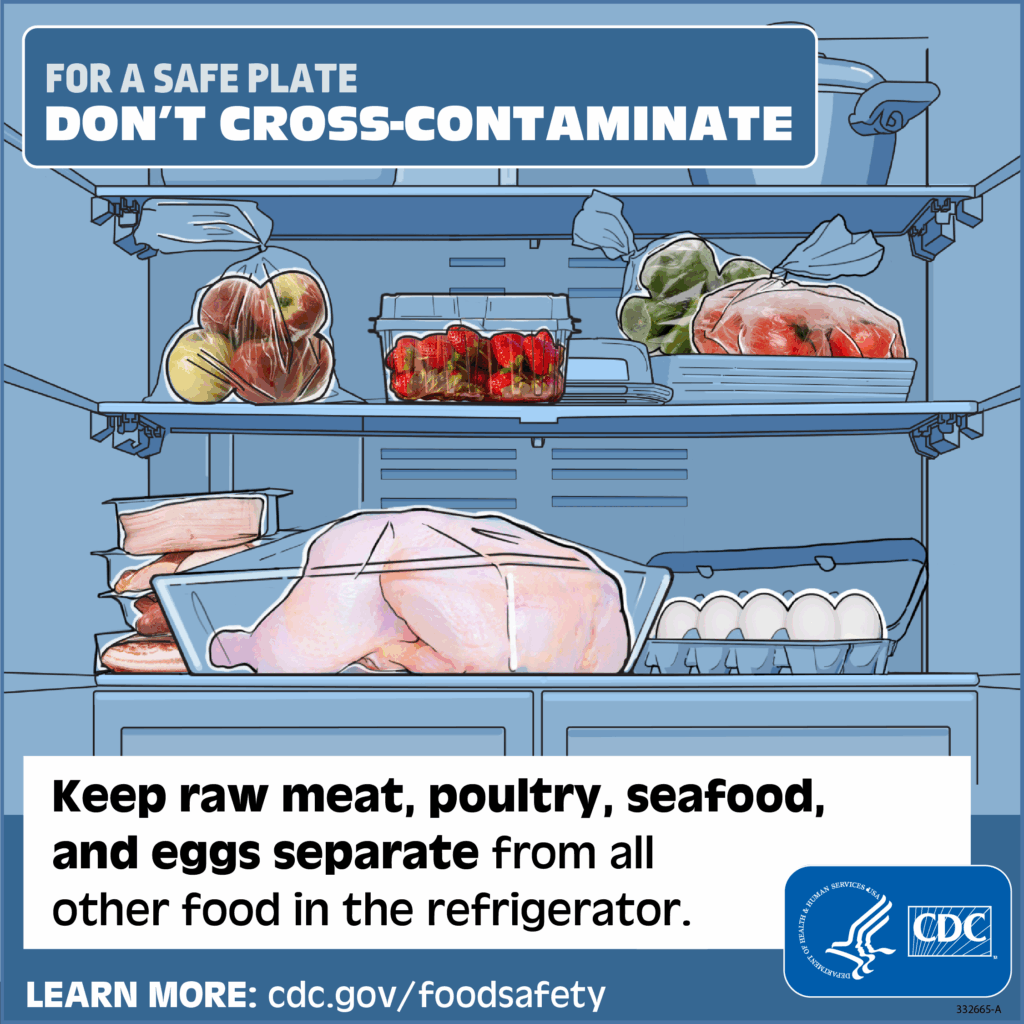
Keep raw meat, poultry, eggs and seafood, along with their juices, away from ready-to-eat foods. When shopping for Thanksgiving essentials, Ingalls suggests keeping meats, poultry and eggs separate from other items in the cart and utilizing the plastic wrap offered at grocery stores as an added layer of separation. Once home, store raw meats and poultry, including frozen turkeys, on a tray with raised edges on the bottom shelf of the refrigerator to prevent juices from spreading around the fridge.
When preparing the meal, use separate cutting boards for meats and poultry, opting for easily cleaned and sanitized plastic or glass boards. Save wooden cutting boards, which are more porous and able to hold on to harmful bacteria, for fresh fruits and vegetables.
Cook
Rely on a meat thermometer, rather than color, texture and cooking time, to determine when meat is fully cooked. For turkey, set the oven to at least 325 degrees Fahrenheit and cook until it reaches an internal temperature of at least 165 degrees Fahrenheit, as measured with a meat thermometer in the innermost part of the thigh and wing and the thickest part of the breast. Cook times vary by turkey weight, ranging from 1.5 hours for 4 to 8 pounds of turkey to around 5 hours for 20 to 24 pounds of turkey.
Cook times increase for families who stuff the turkey, as the stuffing must also reach an internal temperature of 165 degrees Fahrenheit.
“For best food safety, stuffing the turkey is not recommended,” Ingalls explained. “You can more safely enjoy stuffing, or dressing as it is sometimes called when prepared outside of the turkey, by baking it in a casserole dish instead.”
Cooking temperatures also matter when reheating leftovers. Heat leftovers to at least 165 degrees to kill harmful bacteria. Use a thermometer to double-check that leftovers reach the proper temperature, too.
Chill
Appliance thermometers are another important tool to utilize in both the fridge and freezer to ensure a food-safe Thanksgiving meal. For proper food storage, freezers should be kept at or below 0 degrees Fahrenheit and fridges at or below 41 degrees Fahrenheit.
Before the meal, ensure ingredients are stored at the proper temperature. After the meal, return prepared food to refrigeration as soon as possible, and no later than two hours after it is served. Divide large pots of food, such as soup or stew, into shallow containers, and cut cooked meats and poultry into smaller portions or slices for storage in smaller containers. Smaller containers help food cool faster, limiting time in the temperature danger zone (41 to 135 degrees Fahrenheit), where germs can multiply quickly and increase the risk of illness.
“When properly stored and reheated, leftovers can be enjoyed for around 3-4 days,” Ingalls said. “Don’t keep leftovers past 7 days and remember that if anything seems off about the leftovers, no matter how old they are, throw them out, and don’t risk it.”
The raw on the thaw
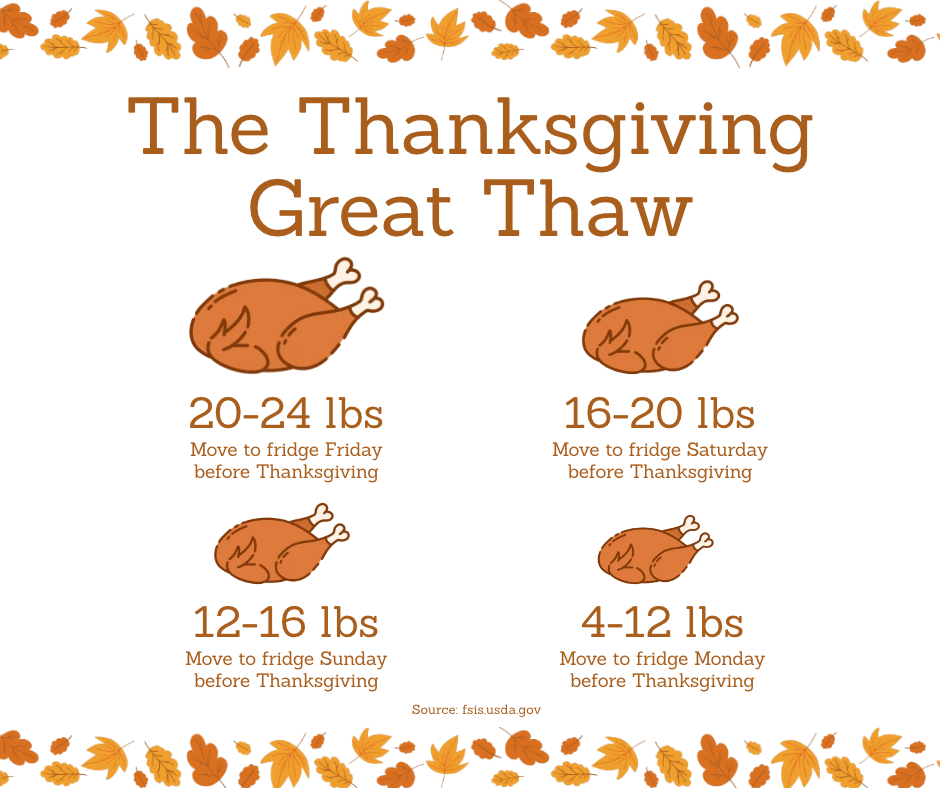
Ingalls explained that there are three ways to thaw a frozen turkey safely: in the refrigerator, in cold water, or in the microwave. To thaw in the fridge, keep the turkey separate from ready-to-eat foods by thawing it in its original packaging on a tray to catch any juices, stored on the bottom shelf.
“Plan for 24 hours of thaw time in the fridge for your turkey for every four to five pounds of meat,” Ingalls advised. “For larger turkeys, thawing may start a week before Thanksgiving. Once thawed in the fridge, cook your turkey within two days.”
Never thaw a turkey on a countertop or under hot water. These methods expose the outer parts of the turkey to the food temperature danger zone, between 41 and 135 degrees Fahrenheit, allowing harmful bacteria to multiply quickly.
“If you need your turkey to finish thawing a little faster, stick the turkey under cool running water,” Ingalls explained. “Keep the turkey in its original wrapping to avoid spreading raw juices around the cooking space. Plan for around 30 minutes per pound of turkey using the cool water method. In a pinch, you can also thaw the turkey in the microwave. Cool water and microwave thawing should be done immediately before cooking.”
Wyandot County Public Health wishes the community a happy, healthy Thanksgiving. Test Thanksgiving food safety knowledge by taking Wyandot County Public Health’s Thanksgiving Food Safety Quiz.